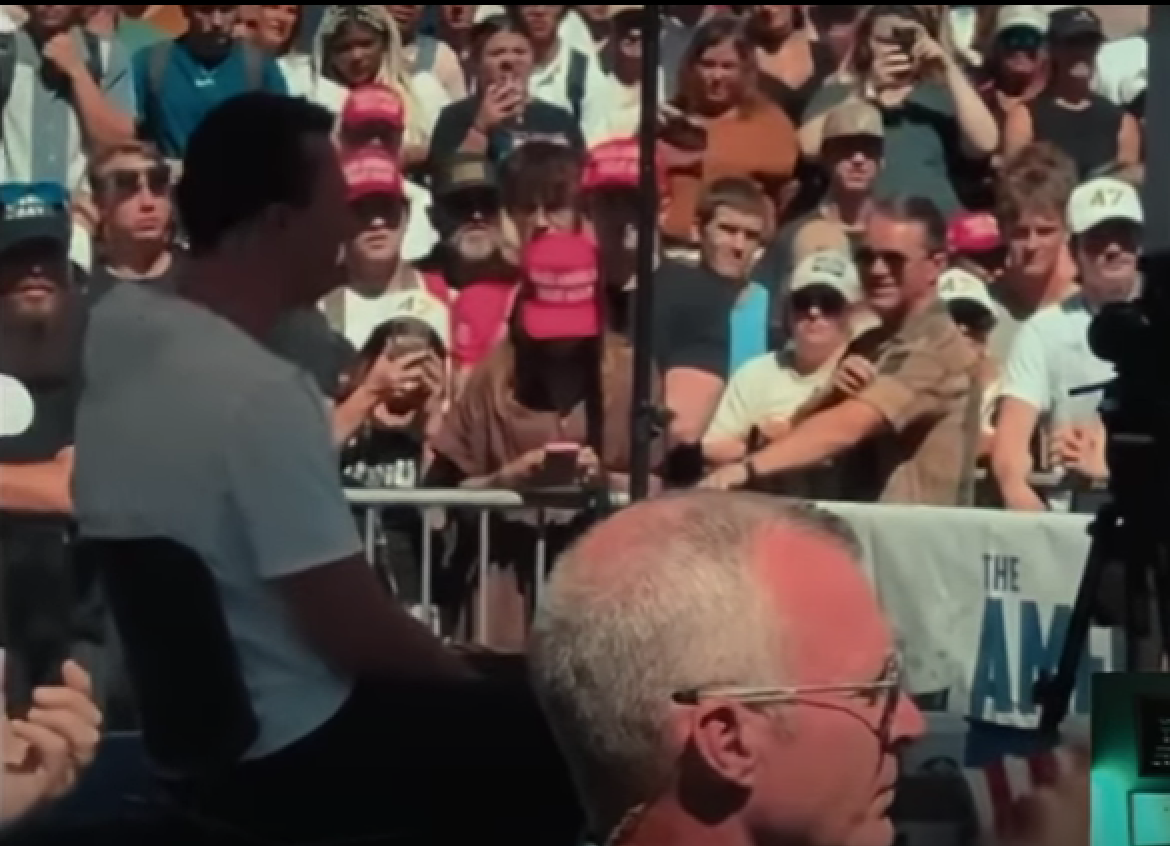
Charlie Kirk is a prominent American conservative commentator, author, and founder of Turning Point USA. Known for his energetic speaking style and engagement with young audiences, Kirk frequently addressed topics related to faith, culture, and politics. In recent years, he showed a growing interest in Catholicism, often discussing Catholic beliefs and practices in interviews and public forums. Amoung other topics, this page features selected video clips and discussions highlighting Charlie Kirk's perspectives on Catholicism, his conversations with Catholic thinkers, and his exploration of topics such as the Rosary, the role of Mary (who does not detract from God, but magnifies Him), and the journey from Evangelical Protestantism and a trajectory towards the Catholic faith.
Following his assassination in September 2025, new controversies and debates have arisen over possible motives and pressures surrounding Kirk's final months. Investigative journalist Max Blumenthal reported that Kirk had rejected funding offers from influential pro-Israel figures, and privately confided that he felt “frightened” by pressure from the Israel lobby. Candace Owens echoed these concerns, alleging that billionaire Bill Ackman and others staged a coercive “intervention” to pressure Kirk into changing his stance on Israel. Tucker Carlson, while cautioning against exploiting Kirk's death for political ends, ackowledged the heated climate of donor influence and the targeting of dissenting voices. Alternative media outlets such as YouTube source *Man in America* have also amplified questions about whether intelligence agencies, including the CIA or Mossad, could have had a role, though no verified evidence has been produced to substantiate such claims. The Israeli government and its supporters have strongly denied any involvement, calling the allegations false and dangerous.
These disputed accounts highlight the wider struggle Kirk faced at the intersection of politics, faith, and international influence. They have become part of his legacy, raising questions about free speech, foreign entanglements, and the risks borne by public figures who challenge powerful interests.
Length: 6.31
Length 6.30
Length: 9.21
Length: 1.27
Length: 21.59 (but very informative - some graphic images)
LINK here - opens in YouTube
Length: 25.14 (counters the above link)
LINK here - opens in YouTube
From 1.28 - 6.30
| Mary | Kirk / Church | Rosary |
|---|---|---|
| Start at: 2.57 - End at: 4.30 | Start at: 6.13 - End at: 6.38 | Start at: 8.40 - End at: 9.10 |
Start at: 5.00 - End at: 6.38
Length 2.14
Length: 0.35
Length: 9.25
From 0.14 - 0.25
From 8.46 - 10.27
- Supposedly Charlie was shot with a 30-06. This would create a massive exit wound and fluids would literaly be all over. Why was there no blood splattered on the back drop?
- Why was there no whole in the tent wall behind him?
- Why was ther no autopsy?
- ?
- ?
- ?
In the aftermath of Charlie Kirk's murder, some lawmakers, commentators and Pam Bondi have invoked his assassination to justify the enactment of new "hate speech" legislation. While framed as measures to combat extremism, such legislation often serves as a euphemism for restricting free speech, particularly the expression of religious beliefs. This concern is underscored by the Federal Bureau of Investigation's (FBI) previous stance toward Traditional Catholics. In January 2023, the FBI's Richmond field office produced a memo suggesting that "radical") Traditionalist Catholic" ideology posed a potential threat of racially or ethnically motivated violence. The memo used the term "radical" which, of course, is nebulous and morphed into anything "subjective" in the future. However, the memo's reliance on biased sources, including the Southern Poverty Law Center, and its implications for religious freedom raised significant concerns. Subsequent investigations revealed that the FBI had distributed the memo to over 1,000 employees nationwide and had drafted additional documents employing similar anti-Catholic terminology. These actions prompted widespread criticism and calls for accountability regarding the FBI's approach to religious groups and the potential misuse of hate speech legislation to suppress religious expression.