Fencing Reference Guide

This guide explains the three fencing disciplines, target areas, rules, styles, and the concept of Right of Way. Perfect for beginners or Olympic viewers!

Foil

Foil

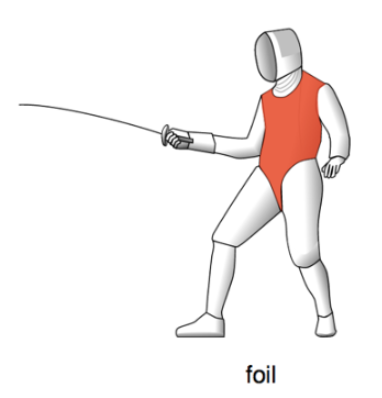
Target area: Torso only (front and back), including the metallic vest called the lamé

Valid hit: Tip only (thrusting weapon)

Right of Way: Yes

Style: Tactical and precise. It is about quick thinking, rapid changes between attack and defense, and seizing the initiative. Fencers use feints, parries, and ripostes to outmaneuver opponents in short, fast exchanges, always adapting to the opponent’s moves and the right of way rules.

Key idea: If both fencers hit simultaneously, the referee awards the point based on who had right of way.

What is worn: Fencers wear a mask, jacket, glove, underarm protector, breeches, and a metallic lamé vest to register valid touches. Chest protectors are also common for safety.

Strategy: Foil fencing emphasizes a balanced stance, quick footwork, and precise thrusts. Maintain a low, stable posture for defense and rapid lunges for attack. Use feints and parries to gain right of way, and focus on controlling the center line to limit your opponent's options. Logical strategies include setting up attacks with preparatory movements, exploiting openings in your opponent's defense, and using ripostes after parrying.
Sabre

Sabre

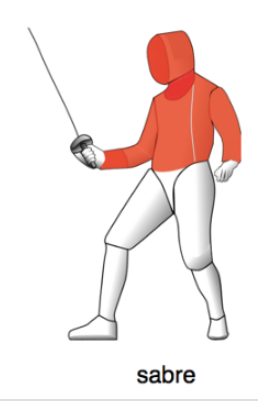
Target area: Everything above the waist (excluding hands)

Valid hit: Tip and edge (can cut or thrust)

Right of Way: Yes

Style: Fastest and most aggressive, characterized by lightning-fast attacks, quick footwork, and aggressive tactics. Fencers must react instantly to their opponent's moves, often launching attacks immediately after the referee's command. The emphasis is on speed and aggression, with rapid cuts and parries dominating the exchanges. Sabre is about explosive speed and offense. Bouts are often decided in a split second, with both fencers racing to land the first valid hit. Timing, anticipation, and immediate reaction are crucial, and the right of way rules reward the fencer who initiates the attack.

Key idea: Bouts are extremely quick, often decided in under a second.

What is worn: Fencers wear a mask, jacket, glove, underarm protector, breeches, and a metallic lamé covering the target area (torso and arms). Chest protectors are also used for safety.

Strategy: Sabre fencing is all about speed, aggressive attacks, and quick reactions. Maintain a forward stance for explosive movement and be ready to launch attacks immediately after the referee's command. Logical strategies include initiating attacks to gain right of way, using rapid cuts and parries, and anticipating your opponent's actions. Focus on timing and distance to land clean hits and avoid counter-attacks.

Épée

Épée

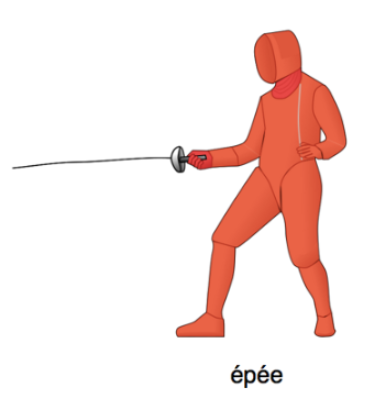
Target area: Entire body (head to toe)

Valid hit: Tip only (thrusting weapon)

Right of Way: No

Style: Patient and strategic, rewards long-term planning, patience, and careful distance control. Fencers often set traps, wait for mistakes, and use the whole strip to minimize risk. Double touches are possible, so épéeists may aim for them when ahead in score.

Key idea: If both fencers hit at the same time, both get a point (double touch).

What is worn: Fencers wear a mask, jacket, glove, underarm protector, breeches, and chest protector. No lamé is needed, since the whole body is a valid target.

Strategy: Épée fencing rewards patience and careful distance control. Keep a balanced stance and be ready to retreat or advance quickly. Since the whole body is a target, minimize exposure and avoid risky lunges. Logical strategies include waiting for your opponent to commit, counter-attacking, and aiming for double touches when ahead in score. Use subtle blade movements to provoke mistakes and capitalize on openings.

Right of Way Explained

Right of Way

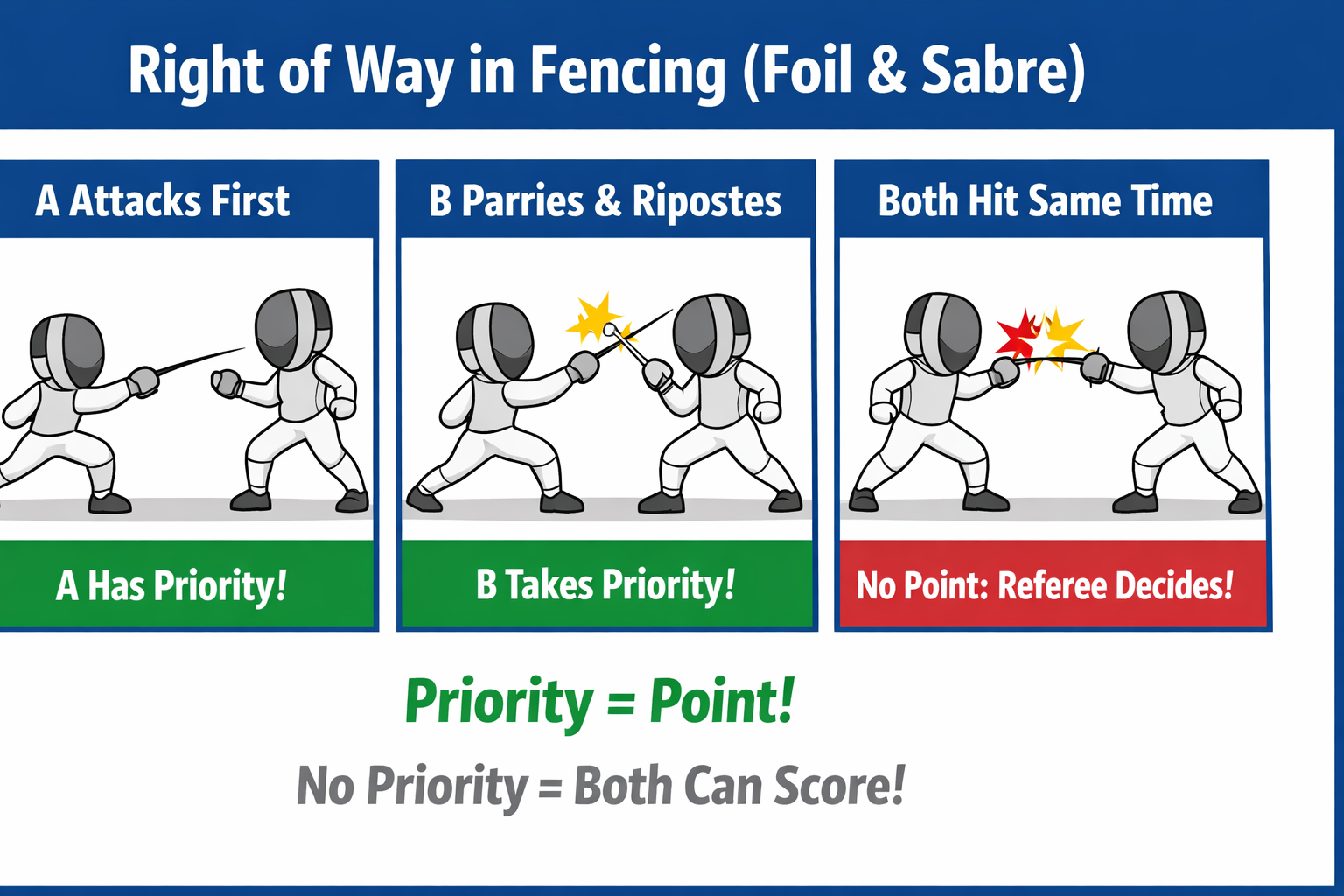
This rule applies only to foil and sabre. It determines which fencer gets the point if both hit at almost the same time.

Right of Way Diagram

Diagram: Fencer A attacks first, has right of way. Fencer B must parry before hitting to get the point.

Quick Comparison Table
Weapon Target Area Tip Only? Right of Way? Typical Style
Foil Torso Yes Yes Tactical
Sabre Above Waist No Yes Very Fast
Épée Whole Body Yes No Strategic
Foil Fencing Outfit Sabre Fencing Outfit Épée Fencing Outfit